Labour Report Criticises ‘Rural Penalty’
Rural residents face higher overlapping costs than our urban neighbours. Rural areas need a dedicated strategy to overcome this ‘rural penalty’.
LRRG Calls for Rural Strategy to tackle rural poverty and emerging off-grid energy crisis in rural area
- Nearly 9.5 million people live in rural England — yet poverty in the countryside is routinely undercounted, underfunded and structurally overlooked.
- A major new report reveals rural households face a “rural penalty”, spending hundreds— and often thousands — more each year on transport, food and energy simply to reach a basic standard of living.
- The dramatic rise in the cost of energy due to the Iran war is hitting rural areas hardest – with surging domestic heating oil, and LPG affecting millions of rural homes, and the rising cost of fuel at the pumps likely to hit rural areas hardest
- The report calls for a comprehensive Rural Strategy, placing social and economic mobility at its heart and reforming how government measures, funds and delivers services in rural Britain.
A landmark new report published today by the Labour Rural Research Group (LRRG) warns that rural poverty is deeper and more widespread than official statistics suggest, with families across the countryside paying a structural “rural penalty” simply to reach a basic standard of living.
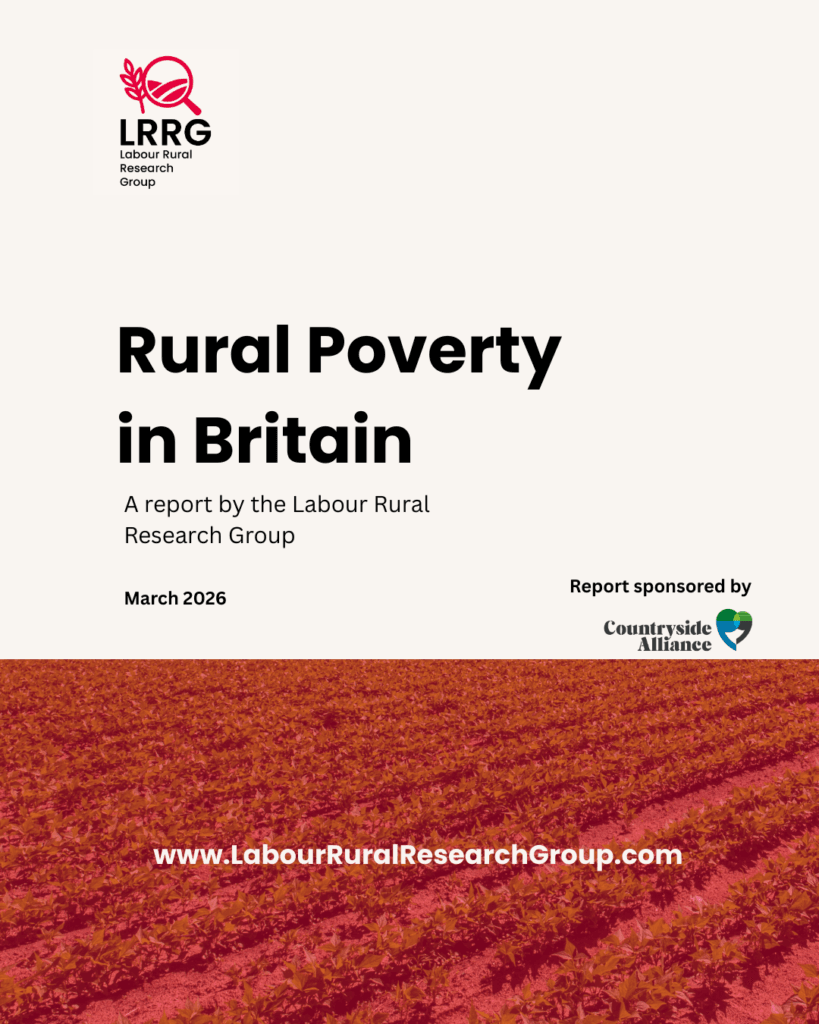
Drawing on evidence from councils, NHS bodies, charities, rural businesses and dedicated focus groups with residents, Rural Poverty in Britain finds a consistent pattern: rural households are expected to travel further, pay more and rely on fewer alternatives, yet national funding and service models continue to assume urban density, economies of scale and proximity to services.
Focus group research undertaken in rural areas and conducted exclusively for the report, reinforced these findings. Rural poverty was experienced less as isolation from places, and more as isolation from systems. Transport unreliability, overstretched health services and thinning education pathways were seen as mutually reinforcing and negative pressures, creating a persistent sense that rural living demands more from households while offering fewer supports in return.
This issue has been brought into acute focus in the past few days. Recent reports indicate that the global price shock caused by the escalating situation in the Middle East has led to dramatic and immediate increases in domestic heating oil price – affecting thousands of households in rural areas who are off grid and rely on heating oil for their main heating source.
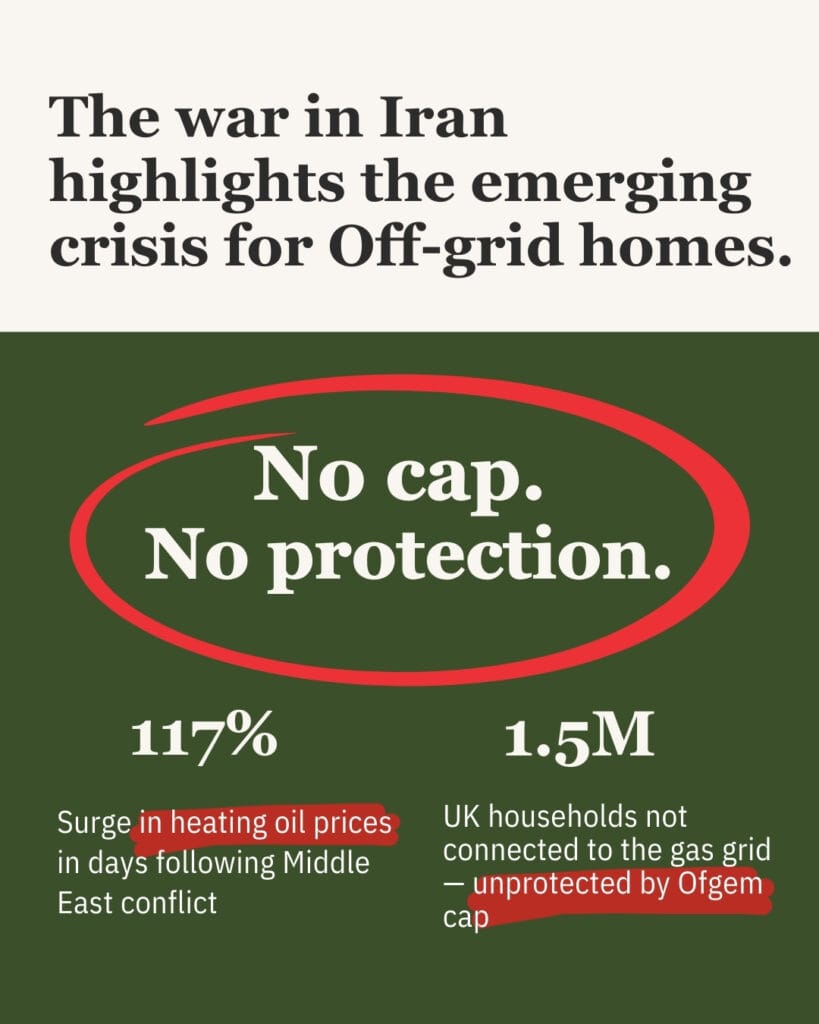
Around 1.5million households across the UK are not connected to the gas network, and are not protected by Ofgem’s energy price cap, which currently shields households connected to the electricity and gas markets. Some households in rural areas are reporting an increase in oil prices of up to 117% over the past few days, due to the volatility in the energy prices.
Commenting on the findings, Jenny Riddell-Carpenter MP, Chair of the Labour Rural Research Group, said:
“For millions of people across our countryside and coastal communities, hardship is not the exception — it is a daily reality. Without coordinated, cross-government reform, rural communities will continue to face higher costs, fewer options and weaker service access. Rural Britain has so much to give, and the last Conservative Government failed to realise that ambition, or to attempt to tackle the inequalities in our countryside. A “Rural Strategy” could help to unleash the potential in rural Britain, and help to deliver real growth and opportunity for our rural heartlands.
“In a matter of days since the war began with Iran, we’ve seen off grid oil prices surge by more than 100%, leaving thousands of UK rural households extremely vulnerable to off grid energy price fluctuations.
“Many thousands of families are now fearful that it will be impossible to buy oil to heat their home, and they are now longing for a mild spring. This volatility exposes rural Britain to greater challenges, and pushes more families into rural poverty. We urgently need a “Rural Strategy”, that includes an energy price cap for off grid homes”.
David Smith MP, Secretary of the LRRG and MP for North Northumberland said:
“Rural areas like North Northumberland have been overlooked for years. Rural residents are more likely to struggle with the cost of living than our urban neighbours and we pay a ‘rural penalty’ on everything from broadband to affordable homes.
Rural areas also pay more for energy, and I am extremely concerned about the rising prices of heating oil. Heating isn’t a luxury in North Northumberland, and I appreciate that the Government is working hard to meet MPs and find a solution to this crisis.
Rural areas play a deep and enduring part in our country’s story, and I want to work with the Government to deliver a ‘rural strategy’ that revives areas like North Northumberland for a new generation.
Commenting on the report, Baroness Deborah Mattinson, said:
“Focus groups commissioned by the Labour Rural Research Group (LRRG) tell a story of extreme hardship, with many forced to cut back on fuel, groceries and more. This much-needed report reports on these grim findings and identifies why rural life can be so much tougher: poor transport connectivity, lack of consumer choice – driven by limited access to budget groceries – lack of availability of adequate public services locally, especially schools and hospitals, all compounded by lower pay and higher housing costs, often inflated by tourism.”
Key findings from the evidence base:
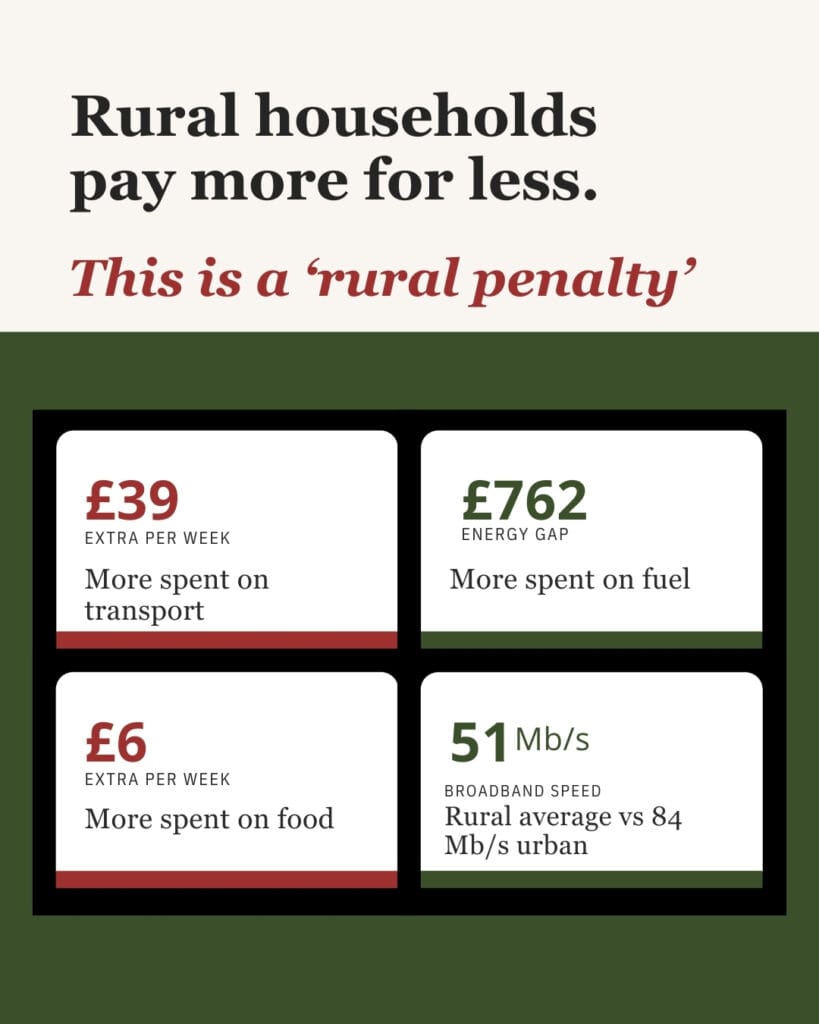
- DEFRA data shows rural households spend on average £39 more per week on transport and £6 more per week on food than their urban counterparts — adding up to thousands of pounds in additional essential spending each year.
- Energy costs are significantly higher too. Median rural fuel bills stand at £2,740, compared with £1,978 in London. Many rural homes are off the gas grid and rely on more expensive and volatile heating fuels.
- Benefit under-claiming is markedly worse in rural communities. Pension Credit non-take-up rises from 35% in urban areas to 42% in rural areas, reaching 54% in villages and hamlets.
- Rural authorities, meanwhile, delivered just 17,506 affordable homes in 2024–25 (compared with 47,256 in urban areas) when 44% of rural private rentals are classed as non-decent (compared with 21% nationally).
- Average rural broadband speeds (51 Mb/s) fall well below urban averages (84 Mb/s), yet rural residents are increasingly expected to rely on digital alternatives where physical services are withdrawn.
David added:
“Rural Britain has enormous untapped potential. With the right investment in connectivity, transport and local enterprise, communities in [insert constituency] will have the opportunities to grow. Ignoring rural disadvantage is not just unfair — it is economically short-sighted.”
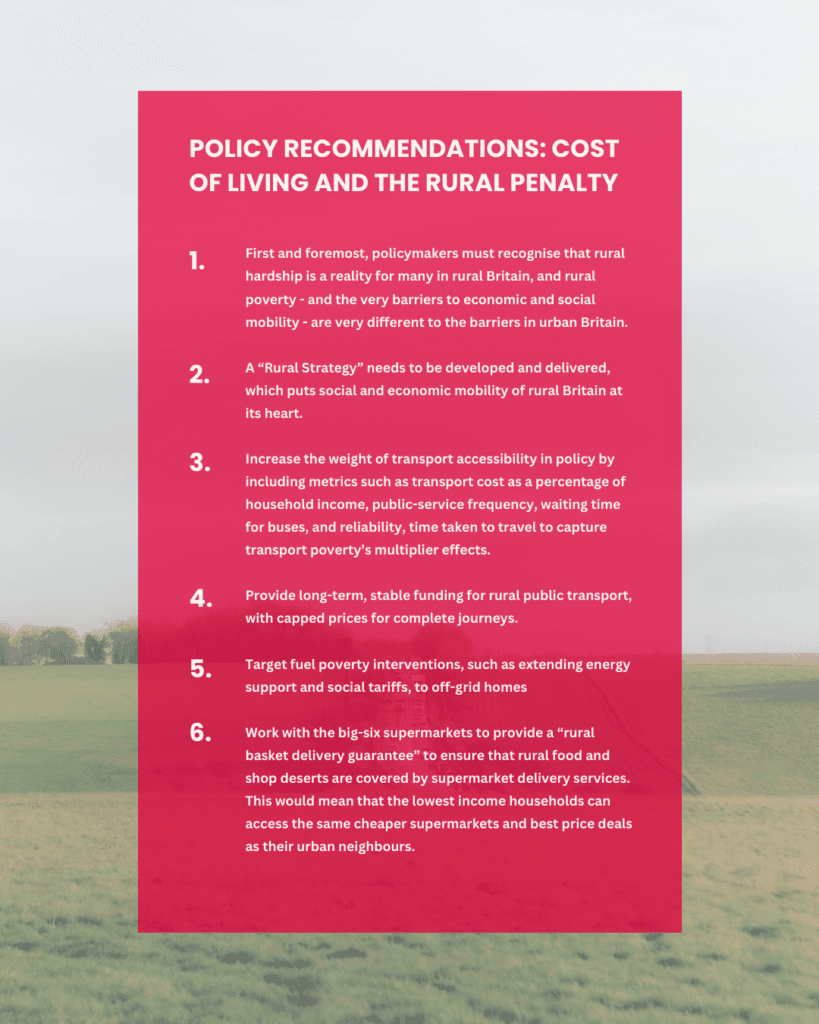
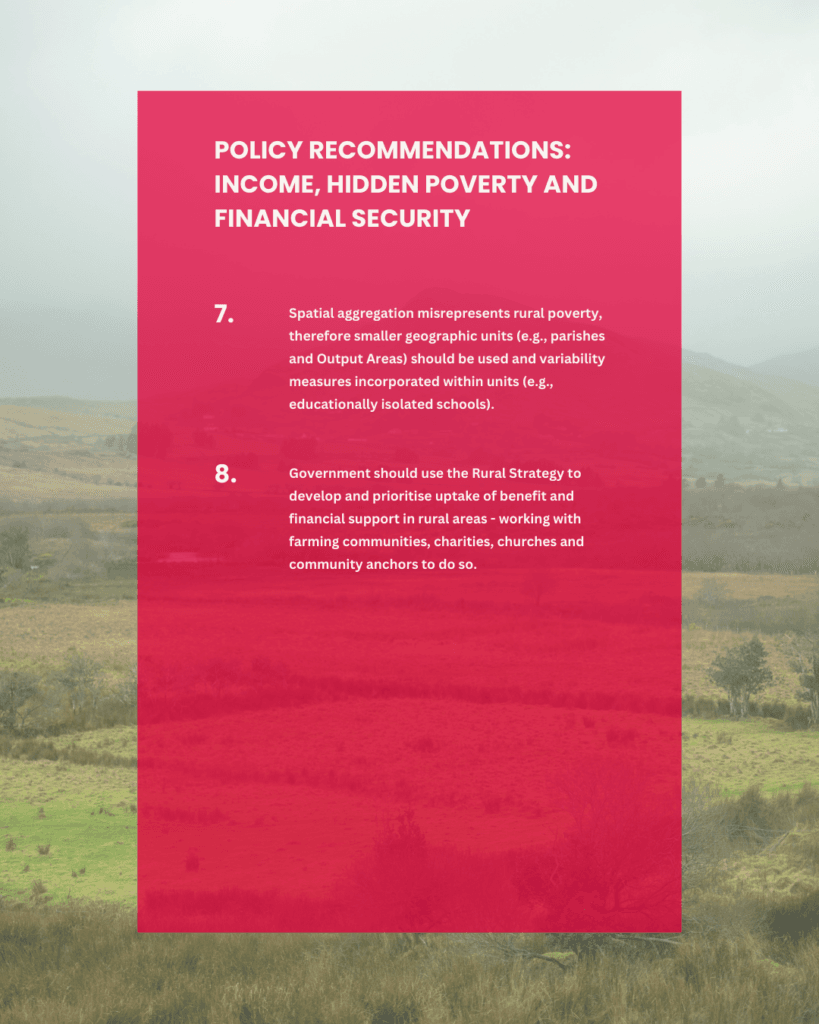
The LRRG has therefore set out 24 recommendations centred on a comprehensive Rural Strategy that addresses root causes rather than symptoms of hardship; going beyond isolated interventions or “rural add-ons”. These address poverty across income, employment, education, health, housing, crime, connectivity and access to services.
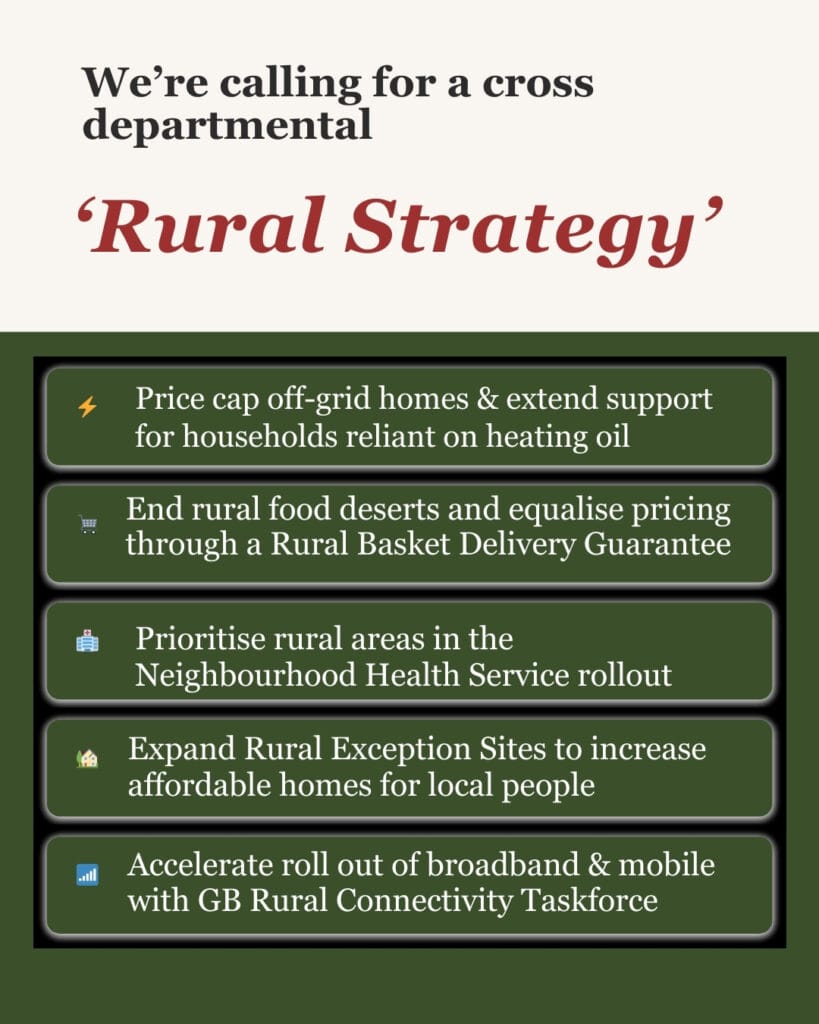
The report sets out a package of targeted reforms designed to address the structural drivers of rural poverty, including:
- Provide Government intervention on the emerging off-grid fuel crisis, drawn into acute focus due to conflict in the Middle East. Target fuel poverty interventions, such as extending energy support and social tariffs, to off-grid homes
- Establish a Rural Basket Delivery Guarantee, in partnership with the big six supermarkets, to ensure rural food and retail deserts are covered by delivery services and that rural residents can access the same affordable supermarkets and price deals as their urban neighbours.
- Adapt the DWP’s JobsPlus model for rural Britain, delivering community-based employment support through farming groups, rural charities, church networks and trusted community anchors rather than solely through Jobcentres.
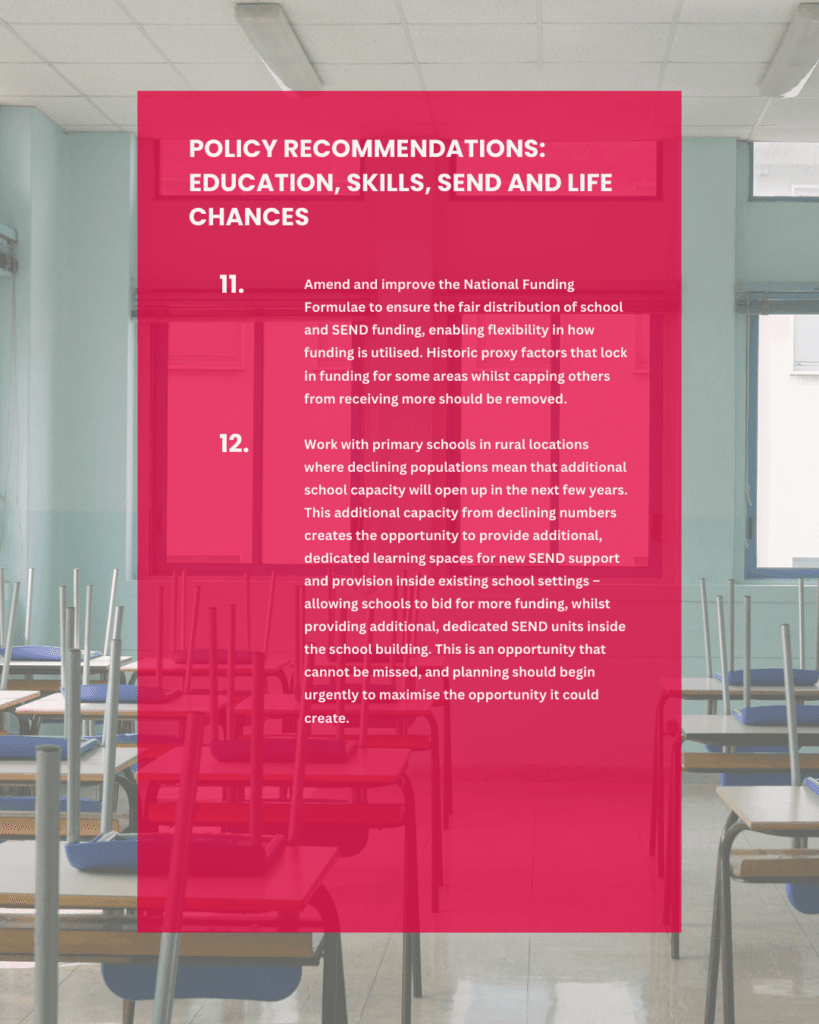
- Invest in rural SEND provision by repurposing surplus school capacity to expand specialist support within existing local schools.
- Prioritise rural areas in the rollout of the Neighbourhood Health Service, ensuring healthcare delivery reflects rural realities and access needs.
- Expand Rural Exception Sites to increase the supply of genuinely affordable homes for local people.
- Establish a Great British Rural Connectivity Taskforce to accelerate broadband and mobile rollout in underserved rural communities
The Labour Rural Research Group will use these findings to shape further policy work over the coming year and to ensure that tackling rural poverty is embedded at the heart of the government’s mission for sustainable, inclusive growth.
You can download the full report at: labourruralresearchgroup.com
‘Rural areas play a deep and enduring part in our country’s story, and I want to work with the Government to deliver a ‘rural strategy’ that revives areas like North Northumberland for a new generation.‘
-David Smith MP
North Northumberland